Running by Feel: How to Use RPE in Your Training
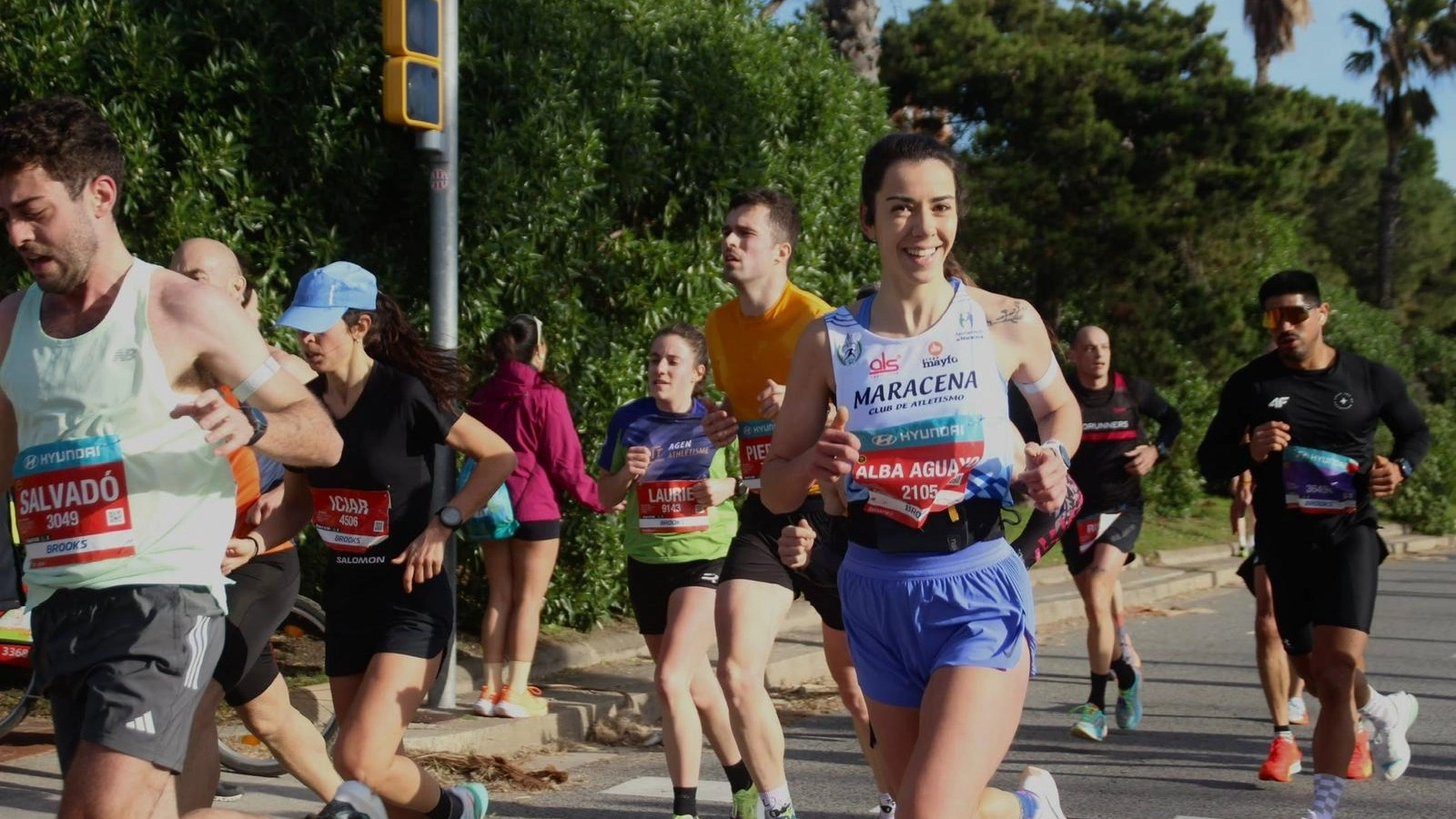
Many runners train with their eyes on the watch every few seconds: pace, heart rate, average per kilometre, zones, watts, elevation… All of that can be useful, but it can also become a source of noise.
Sometimes the watch says you're going "slow", but you know your body is right on the edge. Other times it shows a worse pace than expected, but you're running into wind, heat, hills or accumulated fatigue.
That's where RPE comes in, a simple, practical and very useful tool for any runner.
RPE stands for "Rate of Perceived Exertion". Put more plainly: learning to judge how hard the training actually feels.
It's not about forgetting your watch, but about no longer depending on it alone.
What is RPE?

RPE is a scale for measuring the intensity of a training session based on how it feels.
The most practical form for runners is a scale from 1 to 10:
| RPE | Feeling | How it feels |
|---|---|---|
| 1–2 | Very easy | Walking, very gentle jog, warm-up |
| 3–4 | Easy | You can talk in full sentences |
| 5–6 | Moderate | You're working, but under control |
| 7 | Demanding | You can barely talk, you need to concentrate |
| 8 | Hard | Strong pace, sustainable for a short time |
| 9 | Very hard | Almost at your limit, few repetitions |
| 10 | Maximum | Sprint, total effort, not sustainable |
The key is to ask yourself a simple question during the session:
"On a scale of 1 to 10, how hard is this right now?"
That answer, if you learn to listen to it, is worth a lot.
Why training by feel can make you a better runner
Running by feel doesn't mean running "any old how". Quite the opposite: it means developing a skill that many recreational runners have barely trained.
It helps you pace yourself better
There are days when the same pace feels completely different:
- You slept badly.
- It's hot.
- There's wind.
- Your legs are heavy.
- You did strength work the day before.
- You're accumulating stress.
- The route has more elevation.
If the plan says "easy run at 5:30/km", but today that pace feels like a 7/10 effort, then it isn't easy for you that day.
RPE helps you adapt the training to your reality.
It stops you turning every session into a race
One of the most common mistakes among recreational runners is running easy runs too fast. The guide to preparing for your half marathon already raises this idea: not every session should be demanding; there are easy days, quality days and long-run days.
RPE forces you to ask yourself:
"Is this really easy, or am I pushing out of ego?"
And that question prevents a lot of injuries.
It teaches you to race better
In a race, the watch helps, but it doesn't decide for you.
Your target pace might be 5:00/km, but if you're already at RPE 8 by km 3 of a half marathon, something doesn't add up. You're going too hard for what's left.
RPE lets you correct course before you blow up.
RPE and pace: they're not enemies
You don't have to choose between running by the watch or running by feel. The smart thing is to combine the two.
The watch gives you external data:
- Pace.
- Distance.
- Heart rate.
- Time.
- Elevation.
RPE gives you internal information:
- Real fatigue.
- Muscle sensation.
- Breathing.
- Accumulated stress.
- Mental control.
- Your ability to sustain the effort.
A good runner learns to cross-reference both worlds.
For example:
- If the watch says you're slow, but your RPE is high, you may need to ease off.
- If the watch says you're fast, but your RPE is under control, you may be having a good day.
- If your heart rate is high and your RPE is too, don't force it.
- If your heart rate is high but your RPE is low, there may be heat, caffeine, nerves or lack of sleep at play.
The watch informs. The body confirms.
How to use RPE for each type of training
Easy runs: RPE 3–4
Easy runs should feel easy.
You should be able to hold a conversation without gasping. If you train in a group, this is the classic pace where you can talk, joke around and finish feeling like you've added something, not emptied the tank.
The point of the easy run:
- Improve your aerobic base.
- Recover from intense sessions.
- Add kilometres without punishing yourself.
- Build continuity.
Typical mistake: running the easy run at RPE 6 because "I was feeling good". That's not an easy run. It's a moderate session in disguise.
Long run: RPE 4–6
The long run should be comfortable, but not necessarily dead easy from start to finish.
When preparing for a half marathon, the long run is the heart of the process: it gets your body used to sustaining effort for longer and lets you rehearse pace, breakfast, clothing or gels.
Recommended RPE:
- Start: 4/10.
- Middle section: 4–5/10.
- End: can rise to 5–6/10 due to accumulated fatigue.
If you're at RPE 7 from the start, you're probably running your long run too fast.
Simple rule: the long run should give you confidence, not destroy you.
Short intervals: RPE 8–9
Short intervals are intense, but they should stay controlled.
Examples:
- 200 m.
- 400 m.
- 1 minute fast.
- Short hills.
Here the effort can rise to RPE 8–9, but your technique shouldn't fall apart.
The article on hill running explains that intense uphill work lets you add quality at a lower absolute speed, and therefore with more controlled impact than fast running on the flat.
Signs you're doing it right:
- You finish strong, but not wrecked.
- You can repeat with decent technique.
- You recover enough between repetitions.
- You don't end up limping or feeling like you've been through a war.
Signs you're going too hard:
- Your technique breaks down.
- You start bouncing, heel-striking or hunching up.
- Each repetition drops off massively.
- You need several days to recover.
Tempo or controlled pace: RPE 6–7
Tempo work is that uncomfortable but sustainable point.
Not easy, but not all-out either.
Examples:
- 20 minutes at a brisk pace.
- 3 blocks of 8 minutes.
- 2 blocks of 15 minutes.
- Progressive run with a controlled finish.
The right sensation:
- You're breathing hard, but not out of control.
- You can say short phrases, not hold a conversation.
- It requires concentration.
- You feel you could hold on a bit longer, but not much longer.
This kind of work is very useful for the 10K, half marathon and marathon, because it teaches you to sustain a demanding pace without overdoing it.
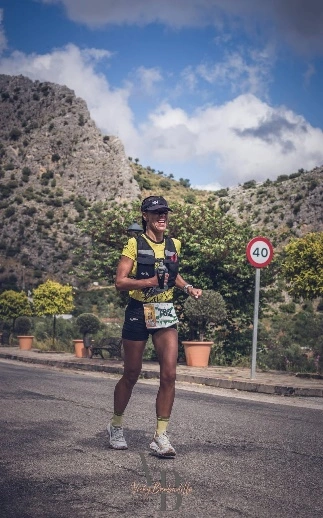
Long hills: RPE 7–8
Long hills are perfect for learning to run with sustained effort without obsessing over your pace.
On a climb, pace per kilometre loses its meaning. You go slower, but your body works hard.
The article on hill running points out that long hills build aerobic capacity, mental strength and pace control, especially for 10K, half marathon and marathon runners.
How to use RPE on hills:
- Don't look at your pace too much.
- Aim for a constant effort.
- Keep your technique.
- Don't set off too hard in the first few metres.
- Finish each repetition feeling in control, not collapsing.
On hills, RPE is more useful than pace.
How to tell if you're training too hard
RPE also helps you spot whether you're piling up more fatigue than you should.
Clear signs:
- Easy runs feel like RPE 6–7.
- You need more days to recover.
- Your legs feel heavy from the warm-up.
- You struggle to sleep.
- You're more irritable.
- Your heart rate rises more than usual.
- You don't feel like training.
- Every session turns into a battle.
If this happens, you don't always need to train more. Often you need to reduce the load, sleep better and recover.
A smart runner isn't the one who always pushes. It's the one who knows when to push and when to ease off.
RPE and training in a group
Training in a group can help you enormously, but it can also make you lose control of your intensity if you let yourself get carried along.
The article on running groups explains that training with others improves motivation, learning and consistency, but it also warns of the mistake of letting your ego take over or turning every session into a competition.
Here RPE is a brilliant tool.
Before each session, ask yourself:
- Is today an easy day or a quality day?
- Is this group going at the pace I need?
- Am I training or racing?
- Am I comfortable, or forcing it to avoid dropping back?
A good group helps you improve. Misusing the group leads you to train too hard all the time.
Practical tip: on easy group runs, you should be able to talk. If you can't get out a full sentence, that's probably not your easy pace.
A practical RPE scale for recreational runners
Here's a simple guide to apply straight away:
| Training | Recommended RPE | Feeling |
|---|---|---|
| Walking / mobility | 1–2 | Very easy |
| Warm-up | 2–3 | Light |
| Easy run | 3–4 | Conversational |
| Comfortable long run | 4–5 | Controlled |
| Demanding end of a long run | 5–6 | Manageable fatigue |
| Controlled pace / tempo | 6–7 | Uncomfortable but sustainable |
| Medium intervals | 7–8 | Hard but controlled |
| Short intervals / hills | 8–9 | Very demanding |
| Final sprint / max test | 10 | Maximum |
Hold on to this idea: most of your training shouldn't go above RPE 5–6.
If you always train at RPE 7–8, you may be working hard, yes, but you're not necessarily training better.
How to use RPE in a race
RPE is especially useful on race day.
In a 5K
- Km 1: RPE 6–7, controlling the start.
- Km 2–4: RPE 8, high effort.
- Final km: RPE 9–10 if you've got strength left.
In a 10K
- Km 1–2: RPE 6, without warming up too much.
- Km 3–7: RPE 7, demanding but sustainable pace.
- Km 8–10: RPE 8–9, pushing progressively.
In a half marathon
- Km 1–3: RPE 5–6, total control.
- Km 4–15: RPE 6–7, target pace.
- Km 16–21: RPE 7–9, depending on how you're feeling.
In a half marathon, the race strategy itself recommends controlling the first few kilometres, settling until km 15 and only pushing if your body responds.
In a marathon
- First 10 km: RPE 4–5.
- Km 10–30: RPE 5–6.
- Km 30–38: RPE 6–8.
- Final km: RPE 8–10 if you've got energy left.
In a marathon, if you're at RPE 8 too soon, the wall shows no mercy.
The most common mistake: confusing "suffering" with "training well"
Many runners believe that if a session doesn't end with a feeling of destruction, it hasn't worked.
Wrong.
A good session doesn't always have to leave you empty. Often it should leave you feeling that you've worked, but with margin to keep training the next day.
Improvement doesn't come from one heroic session. It comes from repeating consistent weeks without breaking yourself.
RPE helps you not to overdo the intensity when it isn't called for.
How to start training by RPE this week
You don't need to overhaul your whole plan. Start simple.
Step 1: score every session
When you finish, write down:
- Duration.
- Type of session.
- Average RPE.
- Maximum RPE.
- Overall feeling.
Example: easy run 45', average RPE 4, legs a bit heavy, but under control.
Step 2: check whether the session matched the goal
If it was an easy run and came out at RPE 7, something went wrong.
It could be:
- Pace too high.
- Poor recovery.
- Heat.
- Stress.
- Lack of sleep.
- Tougher terrain than expected.
Step 3: adjust the next session
If you're piling up fatigue, drop the load.
If you're feeling great, you don't need to push every time. Save energy for the key days.
RPE, heart rate and pace: how to combine them well
The most useful combination is usually:
- Pace: tells you how much ground you're covering.
- Heart rate: tells you how your body is responding.
- RPE: tells you how you're experiencing it internally.
Practical example:
Case 1. Normal pace, high heart rate, high RPE. You're probably tired, hot or piling up fatigue. Lower the intensity.
Case 2. Slower pace, normal heart rate, low RPE. A correct easy run. There's nothing wrong with going slower.
Case 3. Fast pace, controlled heart rate, medium RPE. Good day. You can hold it, but don't go mad.
Case 4. Target pace, normal heart rate, very high RPE. Something doesn't add up: perhaps mental tension, lack of rest or muscle fatigue. Keep an eye on it.
Running by feel isn't running without control
This point matters.
Running by feel does not mean:
- Ignoring the plan.
- Doing whatever you fancy each day.
- Always running easy.
- Always running hard.
- Never looking at your watch again.
It means learning to interpret effort and make better decisions.
A runner who masters RPE knows when to:
- Ease off.
- Hold.
- Push.
- Change the goal for the day.
- Not get dragged along by the group.
- Not obsess over a pace that isn't right for today.
That's training with maturity.
When it's worth seeking professional help
RPE seems simple, but learning to interpret it well takes practice.
It can be very useful to work with a coach or specialised team, like Cardenasports, especially if you:
- Can't tell an easy run from a moderate pace.
- Always end up training harder than planned.
- Get injured frequently.
- Freeze up over your watch.
- Don't know what paces to use for intervals or long runs.
- Are preparing for a 10K, half marathon or marathon with a specific goal.
A professional can help you cross-reference your sensations with real data and adjust the plan so you're not training below or above what you need.
Your body talks too: learn to listen to it
The watch can give you numbers. The plan can give you structure. The group can give you motivation.
But your sensations give you information that no device can fully replace.
RPE teaches you to run more intelligently:
- Not to wreck your easy runs.
- To control the start of a race.
- To know when to push.
- To spot fatigue before you get injured.
- To train with more judgement and less ego.
Running by feel isn't a step backwards. It's a step towards a more complete way of training.
Because the goal isn't just to run faster. It's to understand your body better so you can run better for longer.