How to prepare for your first half marathon
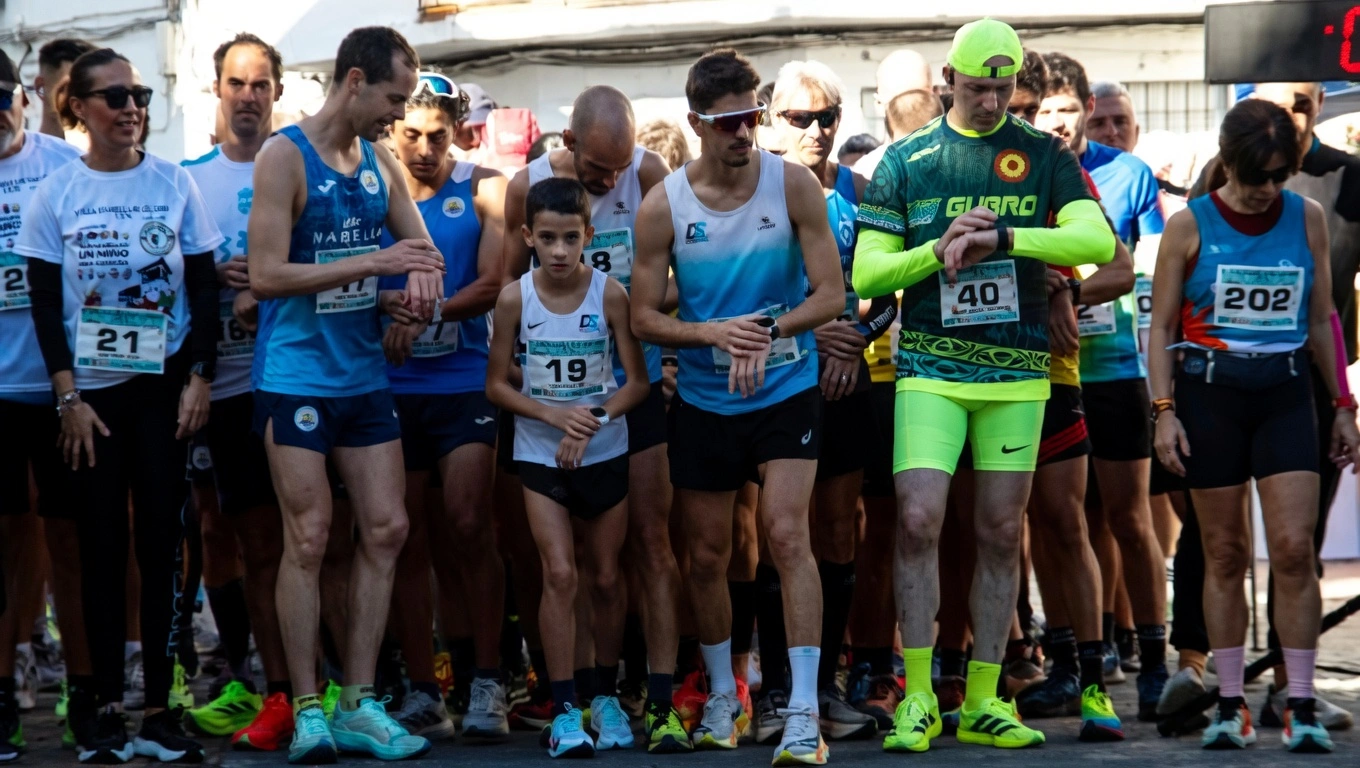
Taking on your first 21-kilometre race is a big step. It requires a minimum of planning, respect for the distance and enough discipline to train consistently.
In this article you will find:
- How much time you realistically need to prepare for a half marathon based on your starting point.
- What basic gear you need (and what you can skip).
- What your training should include: easy runs, intervals, strength work, technique.
- Key tips for race day (pacing, hydration, gels, strategy).
- The most common mistakes beginners make and how to avoid them.
The goal is not to turn you into a professional athlete, but to get you to the start line of your first half marathon well prepared, without any nasty surprises and with enough room to enjoy both the race and the training process. And if you can, do it with the guidance of a professional or specialised team, such as Cardenasports, who can guide you and adapt the journey to your reality.
Is now the right time for your first half marathon?
Before looking at training plans, it is worth honestly answering two questions.
Recommended minimum starting point
It is a good idea to consider a half marathon if:
- You can run at least 40–50 minutes without stopping at a comfortable pace.
- Your body is already used to training at least 3 times a week (even if you combine running with other sports).
- You have already run a shorter race (5K or 10K), even if it was just a "long training session with a bib number".
If you do not meet these criteria yet, the smartest approach is to build up gradually: first consolidate the 5K and 10K, then think about 21 km.
Realistic expectations
- Goal for a debut: finish the distance feeling good, not chasing a specific time.
- If you try to debut with an aggressive target (e.g. sub 1h40 without a solid base), you massively increase the risk of injury or of hating the experience.
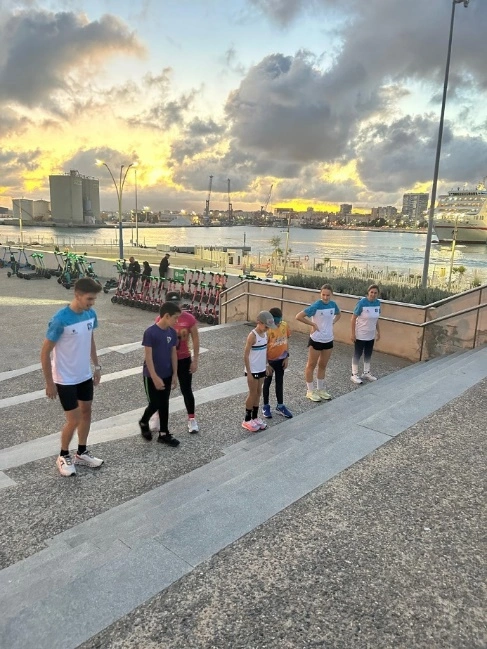
Timelines and phases: how much time do you need
A half marathon is not prepared "in a month". The timeframe depends on your current situation.
Indicative profiles
- Profile A – Beginner with some base: you run 2–3 times a week, 30–40 min, and you have done a 10K. Reasonable timeframe: 12 weeks of specific preparation.
- Profile B – Sporty but not much of a runner: you do other sports (gym, cycling, hiking), but jogging is hard for you. Reasonable timeframe: 16–20 weeks (first build a running base, then the half marathon).
- Profile C – Almost completely sedentary: you barely exercise regularly. The most sensible approach is to hold off on the half marathon for now: work for 3–6 months towards a solid 5K and 10K, and only then think about 21 km.
Basic phases of a good process
We can divide the preparation into three blocks:
- Aerobic base (4–6 weeks): getting the body used to running regularly. 2–3 easy runs + basic strength work.
- Specific phase (6–8 weeks): increase in weekly volume. The weekly long run and a quality session (light intervals, fartlek, controlled tempo runs) are introduced.
- Taper (2–3 weeks): slight reduction in volume. Some intensity is maintained to arrive at the start line feeling sharp, but without accumulating fatigue.
Pillars of training for 21 km
Rather than obsessing over a rigid plan, it is more important to understand which building blocks must not be missing from your preparation.
Weekly volume and frequency
- Recommended minimum: 3 running days per week.
- Ideal (if your schedule allows): 3–4 days of running + 1–2 days of strength/mobility.
Volume (total minutes or kilometres) should:
- Increase gradually, not all at once.
- Respect the principle that not every week is harder; include a slightly easier week every 3–4 weeks to absorb the training.
Long run
This is the heart of half marathon training.
- Once a week or every 10 days.
- Comfortable pace: you should be able to speak short sentences without gasping.
- Indicative duration at the peak of preparation: 90–100 minutes for most beginners. In some cases, up to 110–120 minutes if the body responds well and the goal is simply to finish.
Use the long run to rehearse what you will do on race day: timing, breakfast, clothing, possible gels, approximate pace.
Easy runs
Not everything is about going long or "doing intervals".
- 1–2 easy runs per week of 30–50 minutes.
- Low intensity, without seeking fatigue.
- They serve to accumulate mileage, improve the aerobic base and aid recovery.
Strength training
Essential for preventing injuries and keeping the body together when the kilometres start to take their toll.
- 1–2 sessions per week of 20–30 minutes.
- Prioritise:
- Legs (squats, lunges, calves).
- Glutes (bridge, hip thrust).
- Core (planks, bird-dog, dead bug).
You do not need heavy weights: the idea is to become more efficient and resilient, not to shift big loads.
Running technique
Small doses of technique work help improve your posture, increase running economy and reduce repetitive impact.
5–10 minutes, 1–2 days a week, is enough:
- Controlled skipping drills.
- Heel flicks.
- Gentle strides over 60–80 m.
Quality work (intervals, fartlek, tempo)
You do not need to obsess over "elite sessions", but it is important to include some intensity. One session per week is enough for a beginner. If you want to learn more about fartlek and how to structure a session, read our complete guide to fartlek training.
- 6–8 x 1' fast / 1' easy within a run.
- 4–6 x 1,000 m at a pace slightly faster than your race pace, with easy recovery.
- 3 blocks of 8–10 minutes at a brisk pace, with 3 minutes of jogging between blocks.
You do not need to become an expert in interval training: 1 session of this type per week, once you have a minimum base, is enough to see improvements.
Sample training weeks
To make it concrete, here are two examples of weekly structures during the specific phase.
If you train 3 days a week
- Day 1 – Quality + technique: warm-up 10–15', technique 5', fartlek or light intervals (e.g. 8 x 1' slightly faster / 1' easy), cool-down 10'.
- Day 2 – Easy run + strength: easy run 35–45', 20' of basic strength (legs + core).
- Day 3 – Long run: 70–90' at a comfortable pace, depending on the week.
If you train 4 days a week
- Monday – Strength + mobility.
- Tuesday – Easy run 40'.
- Thursday – Quality session (intervals / tempo).
- Saturday – Long run 80–100'.
Wednesday, Friday and Sunday are rest days or days with very light activity (walking, easy cycling, etc.).
Race day: nerves aside
Choosing the race
For a debut, it is better to go for:
- A flat course or one with gentle elevation changes.
- Moderate climate (mild temperatures, no extreme heat).
- Good organisation (clear information, sufficient aid stations).
The day before
- Training: easy jog of 20–30 minutes or complete rest, depending on your training load.
- Nutrition: simple, familiar dinner with some extra carbohydrates, without overdoing it or experimenting.
- Sleep: try to go to bed at a reasonable time; you will sleep a little worse because of nerves and that is normal.
On the day
- Breakfast 2–3 hours beforehand with something you have already tried during long runs.
- Arrive at the start area with plenty of time to spare to avoid stress.
- Warm up for 10–15 minutes (very easy jog + mobility + 2–3 short strides).
- Position yourself in a starting pen that matches your expected pace, not too far forward.
Race strategy: pacing, water, gels
Pacing:
- First 2–3 km: absolute control, even if it feels "too slow".
- Km 3–15: target pace, controlled breathing.
- From km 15: if you feel strong, this is the time to push a little.
Hydration:
- You do not need to drink large amounts at every aid station.
- Regular sips are usually enough; more if it is hot.
Gels / energy supplements:
- Only if you have tried them before during training.
- As a guideline for a beginner who will be out for more than 1h45: 1 gel around km 7–9 and a second gel around km 14–16.
Common mistakes to avoid
1. Underestimating the distance. Thinking that "it is just double a 10K" is a mistake. The fatigue from km 15–18 onwards can feel very different if you do not have a solid base.
2. Starting preparation too late. Trying to be ready in 6–8 weeks from a very low level usually ends in injury or a very tough experience. If you are not going to make it, change your goal; there is nothing wrong with waiting.
3. Turning every training session into a race. Running all your easy runs too fast prevents good progress and uses up the energy you need for the key sessions. Most of the time you should be running "slower than your ego would like".
4. Forgetting the long run or always running it at race pace. The long run is not a weekly test. It is a session to build endurance. It should be regular, but not at a punishing pace.
5. Neglecting strength and mobility work. The longer the distance, the more you notice the lack of stability and strength. Ignoring this is one of the main causes of problems in the knees, hips or back.
6. Going out too fast on race day. An absolute classic. What you gain in the first 5 km at a "heroic" pace, you can lose twice over in the last 5–6 km.
7. Comparing yourself with someone who has nothing in common with you. Looking at times of people who have been training for years only serves to demotivate. Your reference is you: your starting point, your context and your progress.
The real goal of your first half marathon
In your first half marathon, the goal is not to prove anything to anyone or to fight with the clock at any cost. Your priority should be:
- Arriving healthy, without injuries or unnecessary scares.
- Running with your head, managing pace, hydration and nerves well.
- Crossing the finish line with the feeling of "I did it and I want to do it again", not "never again".
Having the support of a professional can make all the difference. Working with a specialised team, such as Cardenasports, gives you:
- A plan tailored to your level and schedule, not a generic template.
- Adjustments to training load, pacing and long runs based on expertise.
- Answers to questions about strength, technique, rest, nutrition and race strategy.
If you respect the timelines, build a good base, look after strength and rest, and let professionals guide you through the process, your debut over 21 km has a much better chance of being what it should be: an important milestone, the start of a new chapter as a runner, on which you can later build better times, new distances and more ambitious goals.