How to prepare for your first 5K or 10K race
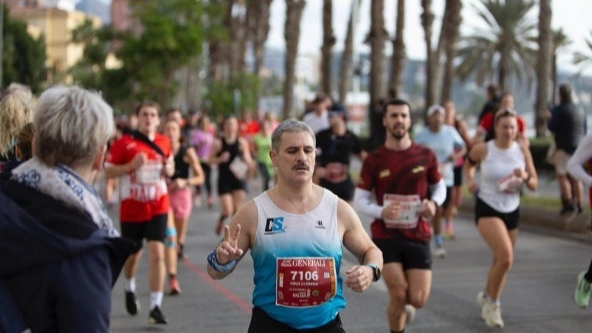

Signing up for your first 5K or 10K is a big step — it calls for a minimum of planning, respect for the distance and a bit of discipline to train consistently.
In this article you will find:
- How much time is reasonable to prepare for a 5K or 10K if you are starting from scratch or close to it.
- What basic gear you need (and what you can skip).
- What your training should include: easy runs, intervals, strength work, technique.
- Key tips for race day.
- Typical beginner mistakes worth avoiding.
The goal is not to become a professional athlete but to arrive at your first race well prepared, without nasty surprises and with room to enjoy both the event and the build-up to it.
How much time do I need to prepare for a 5K or 10K?
A range of 2 to 4 months is reasonable, but we can narrow it down depending on the distance and your starting point.
For a first 5K
- If you already do some exercise (brisk walking, gym, cycling) and can jog for 10–15 minutes without stopping: 6–8 weeks is usually enough.
- If you are coming from a very sedentary lifestyle: think 8–12 weeks, starting with walk/jog intervals.
For a first 10K
- If you already run 2–3 times a week for 20–30 minutes: 8–10 weeks of structured training.
- If your starting point is lower: better to plan for 12–16 weeks, with an initial adaptation phase (walking + jogging) followed by a phase focused on continuous running.
Key point: Can it be done in less time? Yes, some people manage it, but it is not advisable. Is it recommended for most people? No. If you give yourself enough time you reduce injury risk and increase the chances of crossing the finish line feeling good rather than dragging yourself across it.
Basic gear: what you need (and what you don't)
You really do not need an arsenal of equipment, but it is important to get the essentials right.
Shoes
- Choose dedicated running shoes, not casual trainers.
- Do not wear them for the first time on race day: ideally run in them for at least 2–3 weeks beforehand.
- If you can, try several options and prioritise comfort over marketing.
Clothing
- A breathable technical shirt and shorts or tights that do not chafe.
- Running-specific socks (it sounds minor, but they prevent a lot of blisters).
- In cold or wet conditions: a light top layer you can remove once you warm up.
Heart rate monitor / GPS watch (optional)
- Not essential, but it helps you control your pace so you do not go out too hard, and keep an eye on your heart rate during the early weeks.
- If you do not have one, you can rely on feel (perceived effort scale) and time yourself with any stopwatch.
What you do NOT need when starting out
- Carbon-plated racing shoes.
- High-end compression clothing.
- Five different supplements from day one.
Build the habit and the base first; the details will come later.
What your training should include
This is where most beginners go wrong: they either go flat out every session or repeat the same slow jog day after day. The key is to combine easy runs, technique, strength and intervals, tailored to 5K and 10K.
Sensible minimum frequency
- Ideal for progress without injury: 3 training days per week (2 as an absolute minimum).
- If you can manage 4, even better, but be smart about it: for example 3 running days + 1 day of light strength / mobility work.
Easy runs
These form the foundation for both 5K and 10K.
- Intensity: you should be able to hold a short conversation without gasping.
- Approximate duration:
- 5K: 20–35 minutes at first, building up to 40–45 min.
- 10K: 30–40 minutes at first, building up to 50–60 min.
Goal: build an aerobic base, let joints and tendons adapt to the load, and learn to run without pushing to the limit.
Strength training
Strength work is not optional; it is key for both performance and injury prevention.
- 1–2 sessions per week of 20–30 minutes.
- Focused on:
- Legs (squats, lunges, calves).
- Core (plank, variations).
- Glutes (glute bridge, hip thrust).
- You can use your own bodyweight; you do not need a gym to get started.
Running technique
Better technique:
- Reduces impact on joints.
- Improves running economy (you use less energy at the same pace).
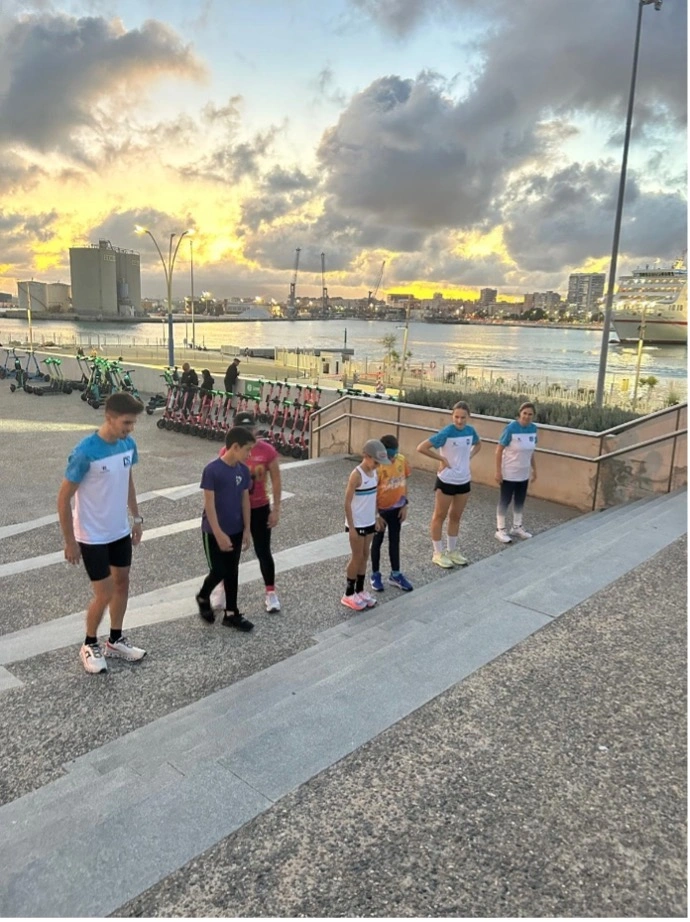
Include 5–10 minutes, 1–2 times per week, of:
- High knees (controlled).
- Butt kicks (heels to glutes).
- Strides (controlled accelerations over 50–80 m).
Intervals (once you have a base)
Adapted for beginners:
- Easy fartlek (for 5K and 10K): 10–15' easy jog + 8–10 blocks of 1' slightly faster / 1' very easy + 5–10' easy jog to cool down.
- Short reps (later in the build-up): 10–15' warm-up, then 6–8 repetitions of 200–400 m fast with walking or very slow jogging recovery, and 10' cool-down.
- Simple pyramids (more advanced phase, especially for 10K): 2' fast, 2' easy, 3' fast, 3' easy, 4' fast, 4' easy, 3' fast, 3' easy, 2' fast, 2' easy.
You do not need to become an interval expert: 1 session of this type per week, once you have a basic foundation, is enough to see noticeable improvements.
Practical differences between preparing for a 5K and a 10K
Although they share most elements, there are nuances:
Preparing for a 5K (typical debut)
- Main focus: build the ability to run 25–30 minutes non-stop. Introduce some tempo work, but without obsessing over the clock.
- Slightly lower total weekly volume: 2–3 running days, 1 strength day.
Preparing for a 10K (natural progression from 5K)
- Main focus: be able to run 60 minutes at a comfortable pace. Start to differentiate more clearly between easy days and quality sessions.
- Slightly higher total volume: at least 3 running days, 1–2 strength days.
Race day: basic checklist
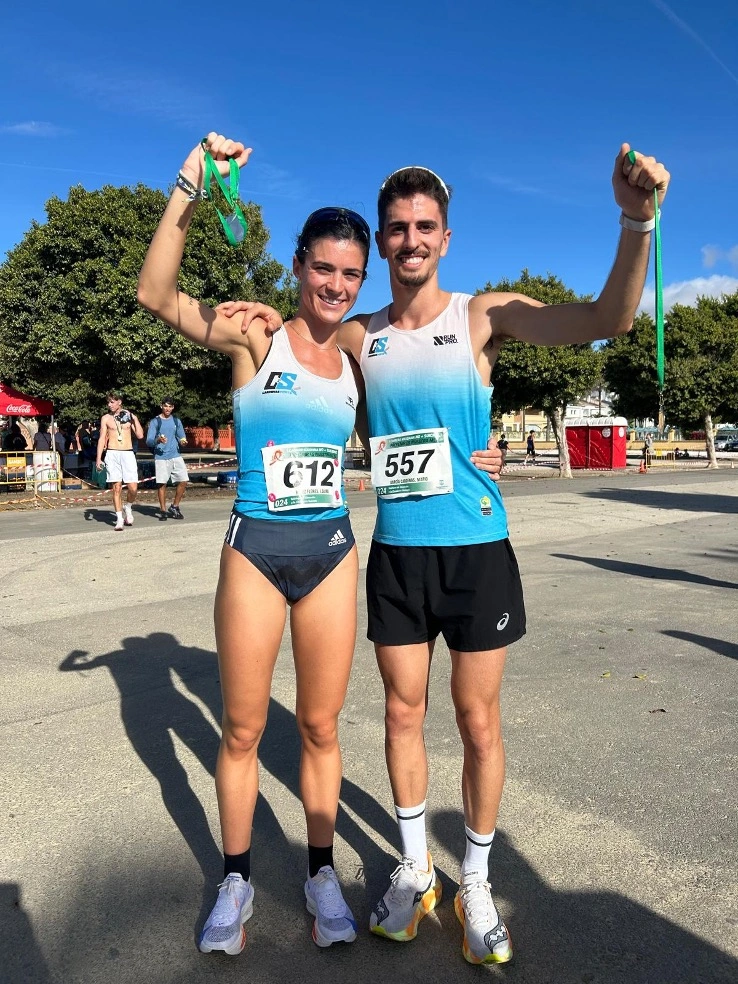
Choose the right race
Choose a race that fits your preparation. Browse 5K races or 10K races in the United Kingdom.
- Go for the flattest, most straightforward course you can find for your debut.
- Avoid races with lots of hills or surface changes if it is your first time.
The day before
- Do not do the workout of your life.
- A very easy jog (or complete rest) + some mobility work is enough.
- Normal dinner, with a little extra carbohydrate if you are running a 10K, no experiments.
- Try to sleep reasonably well (even though nerves will do their thing).
On race day itself
- Have breakfast 2–3 hours before the start , something you already know sits well with you.
- Arrive with plenty of time to use the toilet and warm up for 10–15 minutes (easy jog + mobility + 2–3 strides).
- Line up in the starting pen that matches your pace, not right at the front "just because".
During the race
- First kilometre: slower than you think.
- Next block (km 1–3 in a 5K, km 1–6 in a 10K): target pace.
- Final kilometres: if you have energy left, push at the end , not at the start.
In a 5K you may not even need a drinks station; in a hot 10K it can be wise to take a sip of water at the halfway point.
Typical mistakes worth avoiding
Even with the best intentions, certain mistakes are easy to make when you are preparing for your first 5K or 10K. Spotting them early will help you steer clear and arrive on race day in better shape.
-
Trying to go from zero to race in a few weeks. Attempting to prepare a 5K or 10K at the last minute without a prior base increases injury risk and the likelihood of finishing with a very bad experience. It is better to extend the preparation period and accept a gradual progression that allows your body to absorb the load.
-
Wearing new gear on race day. New shoes, socks or shorts can ruin your race with chafing or blisters. Everything you plan to wear in the race should be "tested in training" so you know it is comfortable.
-
Always training the same way: same distance, same pace. Repeating the same jog every day limits improvement and can overload the same structures time and again. Introducing small variations (easy runs, some tempo work, strength) makes training more effective and more enjoyable.
-
Neglecting strength and mobility. Thinking "to run you just need to run" is a classic mistake. A minimum of strength and mobility work reduces injuries, improves posture and helps you hold your pace with less effort.
-
Starting too fast on race day. Nerves, the atmosphere and the other runners tempt you to go out well above your actual pace. It is far smarter to start slightly below target pace and, if you have energy left, pick it up in the closing stages.
-
Comparing yourself to much more experienced runners. Measuring your performance against people who have been training for years only breeds frustration. Your benchmark should be your own starting point: how you progress from week to week and how you feel after crossing the line.
The real goal of your first 5K or 10K
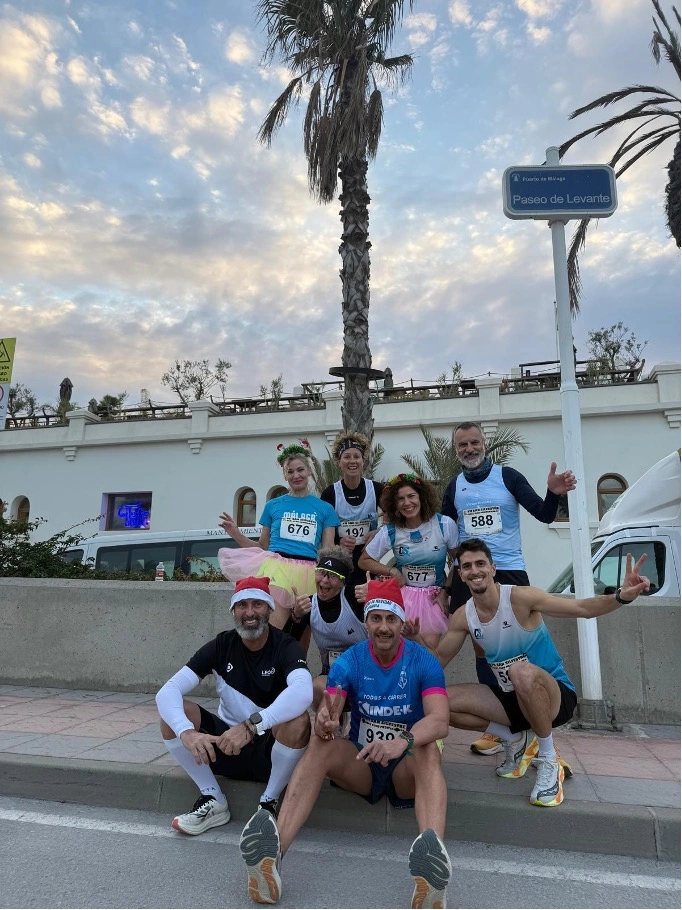
In your first 5K or 10K the priority is not the clock but the experience: finishing healthy, crossing the line feeling good and walking away knowing that this could be the start of a habit rather than a one-off effort , along with a rush of happiness that will draw you into the world of running.
If you give yourself enough time to prepare, respect your paces and avoid these basic mistakes, your debut will have a much better chance of being what it should be: a solid first step on which to build future improvements, personal bests and new goals.