Organising a half marathon: an inside look
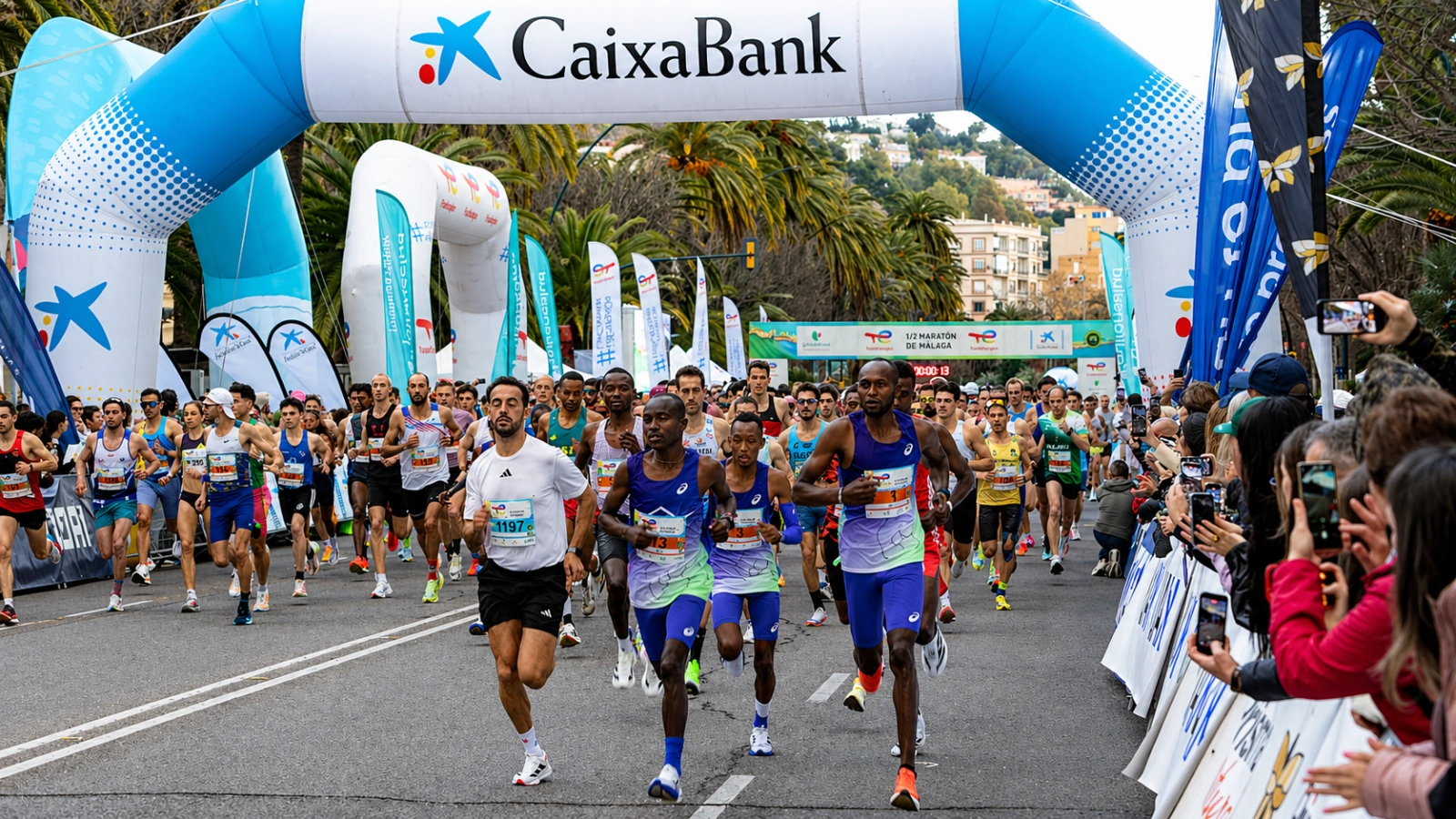
From a runner's perspective, a half marathon seems like a simple process: arrive, warm up, race and finish. But that perception is misleading. Behind it lies a complex organisational system involving thousands of people, an entire city and multiple coordinated systems. The Media Maratón Ciudad de Málaga is a clear example of this complexity, with editions reaching 12,000 participants and establishing itself as one of the most prominent races on the Spanish calendar. This article examines what goes on behind events like these so that, from the runner's point of view, everything appears effortless.
Strategic planning and positioning
Before any operational decision is made, it is essential to define the event's identity. It is not just about organising a race, but about deciding what kind of experience you want to offer.
In the case of Málaga, the strategy is built on three fundamental pillars that guide every decision:
- Performance → a fast course that enables good times and attracts competitive runners.
- Internationalisation → a high level of international participation that positions the event on the global stage.
- Urban experience → an attractive route that combines sport and tourist appeal.
This involves key decisions such as:
- Choosing the date, seeking optimal weather conditions and avoiding clashes with other major races.
- Designing the course, balancing speed, safety and visual appeal.
- Defining the target runner profile, whether elite, amateur or sports tourism.
There is also a direct economic impact on Málaga:
- Higher hotel occupancy.
- Increased spending in restaurants and hospitality.
- A boost for sports tourism, attracting national and international visitors.
Strategic planning therefore defines not only the event itself, but also its capacity to generate sporting, social and economic value for the city.
Course design: performance engineering
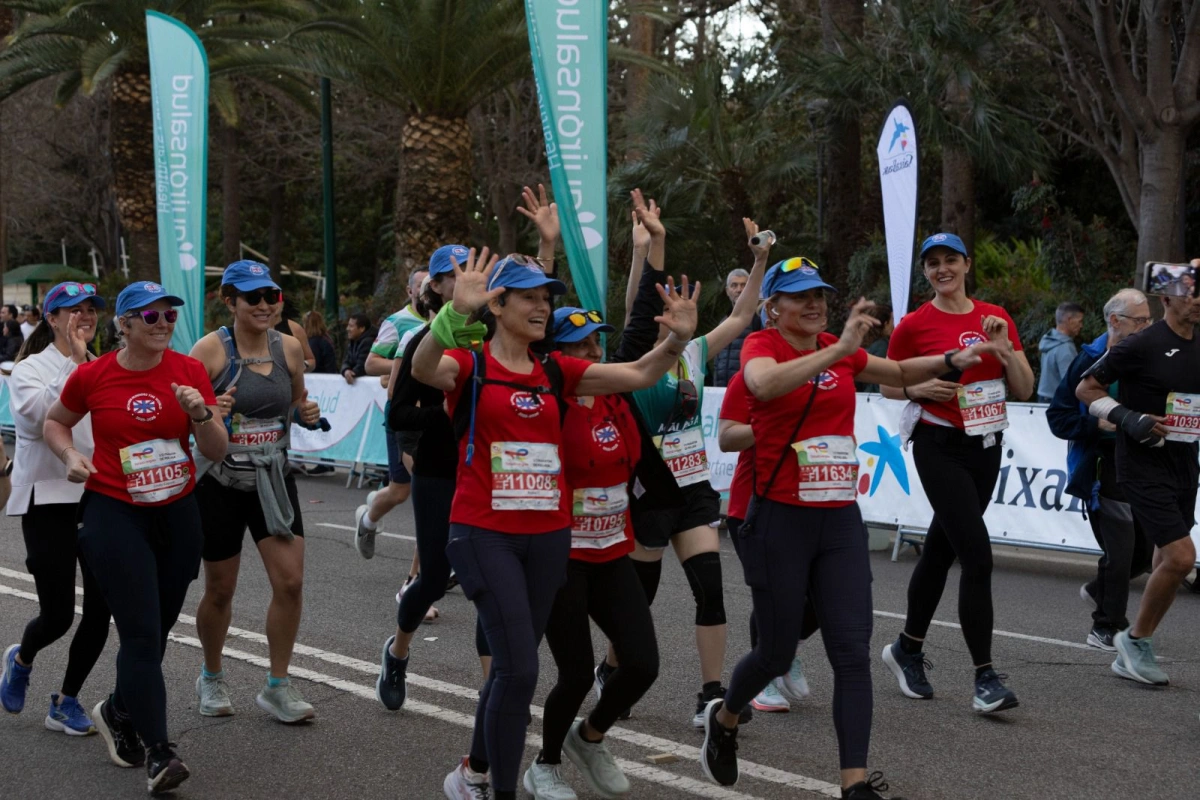
The course is one of the most decisive factors in the quality of the race, as it directly influences runner performance. It is not just about deciding "where to run", but about understanding how the route shapes athletic output.
Key technical variables
The Málaga course is designed through a detailed analysis of technical factors aimed at optimising runner speed and efficiency:
- Elevation profile → a virtually flat profile that minimises effort on gradients.
- Corners → fewer sharp turns to maintain a steady pace.
- Width → wide avenues that prevent crowding and make overtaking easier.
- Wind → accounting for the influence of the coastline on performance.
Each of these elements has a direct impact on a runner's ability to hold their pace and improve their times.
From a physiological standpoint, course design becomes even more important:
- Every corner disrupts running rhythm.
- Every deceleration increases energy expenditure.
For this reason, the Málaga course is optimised for performance, making it a particularly fast and appealing race for those looking to improve their times.
Certification
The official race distance (21.097 km) is certified through approved measurement systems, guaranteeing the reliability of the course.
This certification makes it possible to:
- Validate personal bests, ensuring that recorded times are officially recognised.
- Attract competitive runners who seek certified courses to improve their records.
A certified course increases the credibility and prestige of the event. All of this is carried out under the regulations of the Real Federación Española de Atletismo, which sets the technical criteria for the certification of courses in official competitions.
Budget: the real structure
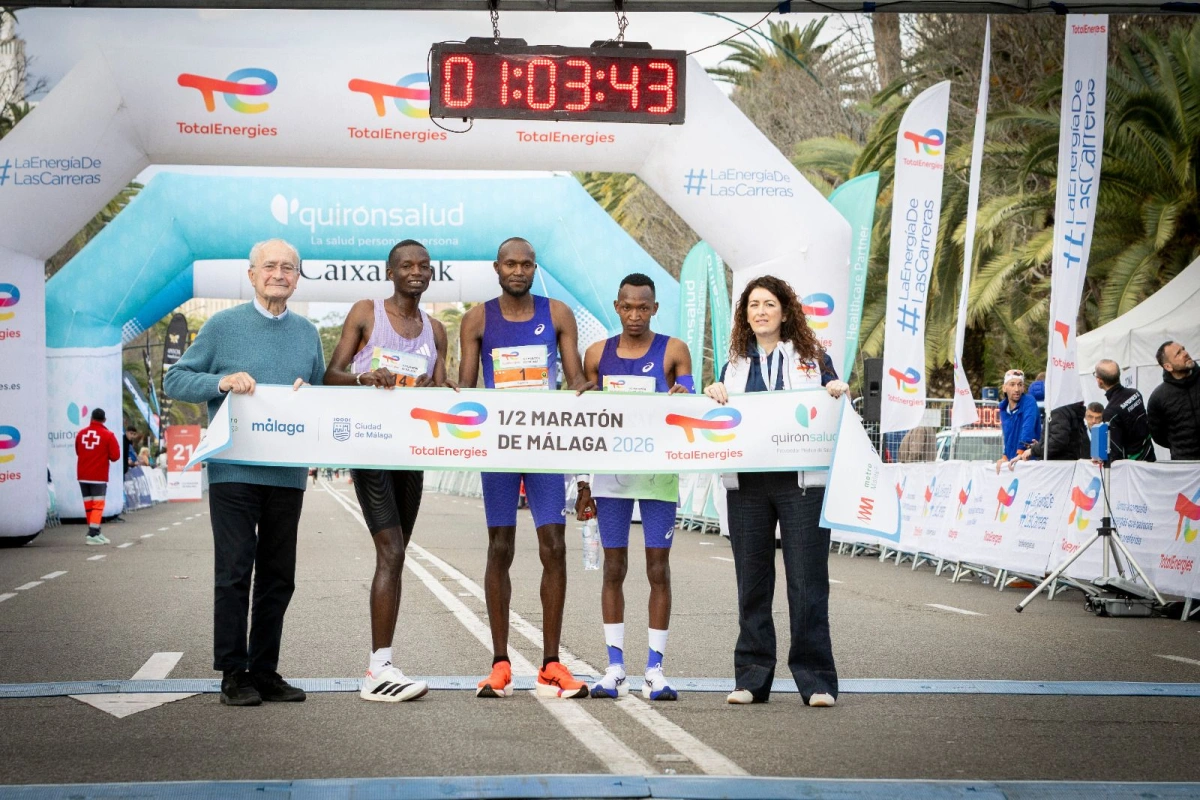
Organising a half marathon requires a considerable investment, as it involves coordinating numerous human, technical and logistical resources. It is not just about adding up costs, but about understanding how each area impacts the quality and safety of the event.
Main cost areas
- Medical care → ambulances, medical staff and emergency equipment to ensure participant safety.
- Infrastructure → barriers, start and finish arches, signage and course control elements.
- Technology → timing systems, chips, results management and digital platforms.
- Logistics → transport of materials and assembly and dismantling of structures.
Each of these elements is essential for the smooth running of the race.
But there is one crucial aspect that shapes all financial planning: growth is not linear.
Increasing the number of participants , for example from 8,000 to 12,000 runners , does not simply mean a proportional increase in costs. It also means:
- Greater logistical pressure.
- Higher operational risk.
- A significant increase in organisational complexity.
In this sense, the event behaves like a system that grows exponentially, where every decision has a multiplying effect on the resources required.
Permits and urban management
Hosting a half marathon means the city temporarily functions differently, affecting both mobility and the daily lives of its residents. It is not just a sporting event, but a direct intervention in the urban space.
To ensure its proper execution, close coordination with the main institutions and public services is essential:
- The City Council of Málaga.
- The Policía Local de Málaga.
- Emergency services, including medical services and civil protection.
Traffic plan
One of the most critical aspects is traffic planning, which must be designed with precision and well in advance to minimise the impact on the city. This involves defining:
- Road closures, clearly marking out the course.
- Exact timings, aligned with the progress of the race.
- Alternative routes, to redirect vehicle traffic.
- Emergency access, ensuring rapid intervention when needed.
In an active and dynamic city like Málaga, efficient traffic management is key to ensuring both the success of the event and its coexistence with daily urban life.
Operational logistics
This is where the race is truly built, as all prior planning translates into practical execution. Logistics is the system that makes everything work in real time.
Aid stations
These are planned from precise calculations based on real variables:
- Expected temperature.
- Number of runners.
- Flow rate per minute.
The result: tens of thousands of bottles, strategic distribution along the course and perfectly coordinated volunteers.
Starting corrals
These ensure an efficient flow of runners at the start, grouped by estimated times and verified records. Good organisation at the start determines the course of the entire race, preventing bottlenecks, falls and frustration.
Signage
The main objective: the runner should not have to think during the race. This is achieved through clear and visible signage, a constant presence of volunteers and an intuitive, well-designed course.
Safety: a critical system
Safety is one of the fundamental pillars of the event and requires thorough planning.
Medical provision
This includes a complete medical care system:
- Fully equipped ambulances.
- Intervention teams distributed along the course.
- Medical support at the finish area.
It is scaled according to the total number of runners and expected weather conditions. The aim is to guarantee a rapid response to any incident.
Traffic control
Coordinated with the Policía Local de Málaga, it ensures both the safety of participants and the integrity of the course.
Volunteers
They are a key element in the functioning of the event: guiding runners, providing logistical support at various points and offering assistance throughout the race. They represent the human factor that makes the entire system possible.

Timing and data
The system is based on chip technology, enabling precise and reliable measurement: exact finish times, split times during the race and real-time results. A key element for credibility, transparency and the runner's experience.
Race week
In the days leading up to the event, the city gradually begins to transform to host the race. It is not a sudden change, but a planned build-up to race day.
Expo
The expo is the main meeting point before the event and serves several key functions:
- Collecting race numbers.
- Access to relevant information for participants.
- Building atmosphere and excitement ahead of the race.
It is the runner's first real contact with the event.
Setup
In this phase, all technical planning becomes reality: installing infrastructure (arches, barriers, start and finish zones) and complete course signage. The goal: everything is perfectly ready before race day.
Race day
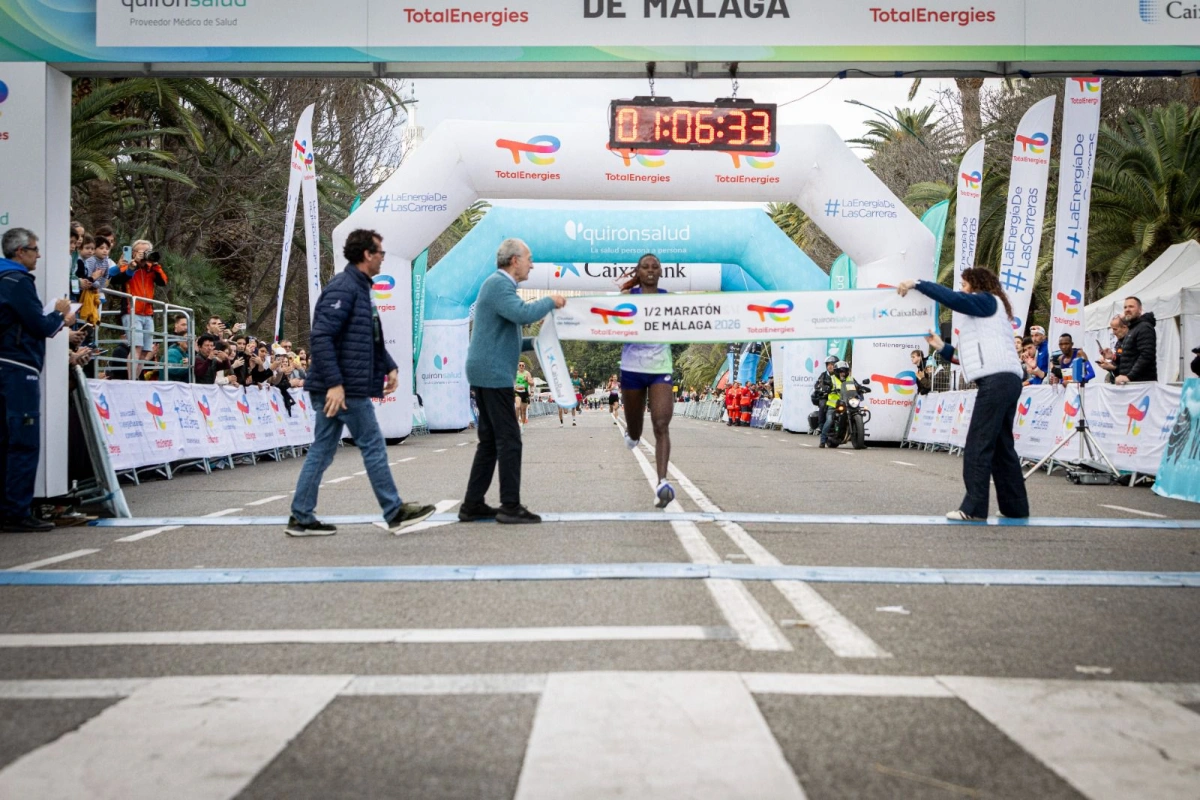
This is the moment when the entire organisation is put to the test, with every planned system executed in real time. Here, the ability to react is just as important as the planning that came before.
During the race, management is based on:
- Constant communication between all teams.
- Rapid decision-making in response to any unforeseen situation.
- Continuous adaptation to circumstances.
Examples of common situations:
- Changes in wind, especially along the coast.
- Medical emergencies requiring immediate intervention.
- Logistical adjustments on the fly.
The success of the event depends on coordination and responsiveness at this critical moment. The goal: the runner notices nothing.
Post-event
Once the runners cross the finish line, an equally important phase begins for the overall success of the event. The work does not end with the race; this is where evaluation and improvement take place.
After the finish, several key actions are carried out:
- Cleaning the course and all areas used.
- Dismantling infrastructure and installed logistics.
- Data analysis, including participation, times and any incidents.
This is the phase where the foundations are laid for improvements in the next edition.
What you really pay for with your race number
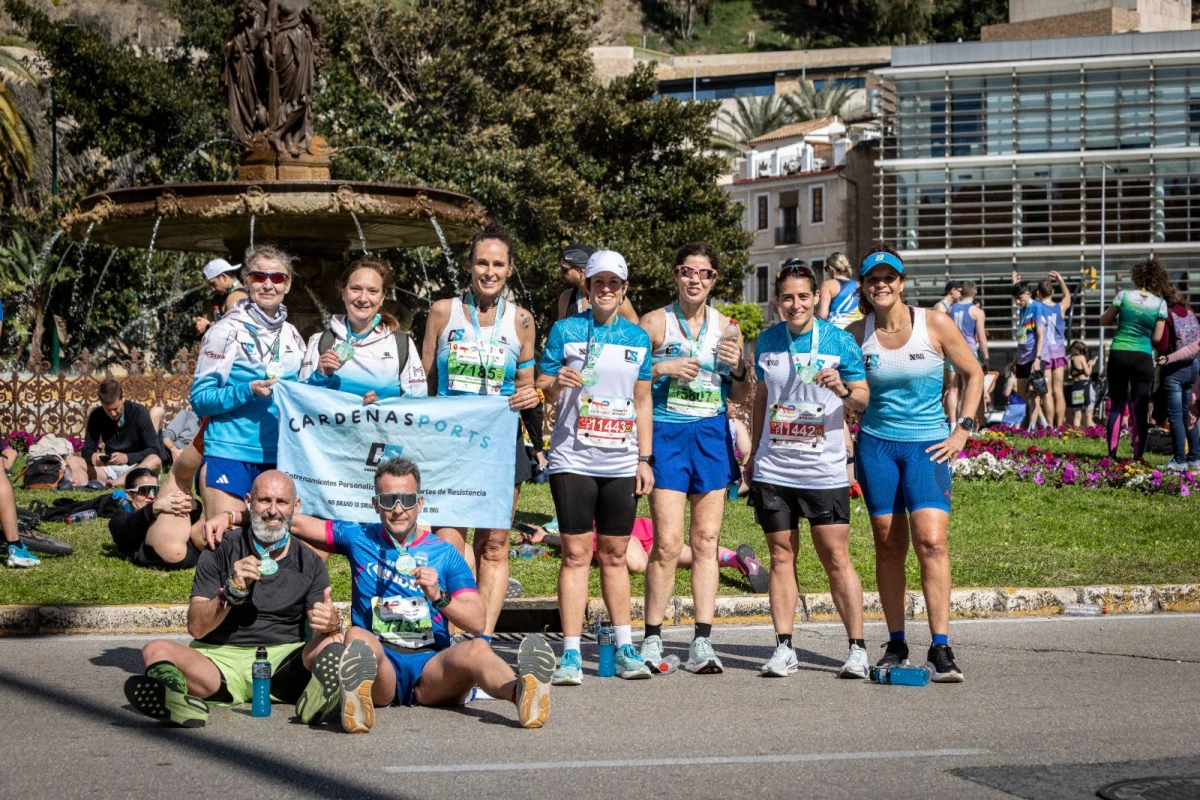
When you take part in the Media Maratón Ciudad de Málaga, you are not just paying to run a distance. You are investing in a complete and carefully organised experience.
You pay for:
- Safety, with a medical system prepared for any situation.
- Organisation, coordinating every element of the event.
- Precision, in timing and race control.
- Experience, enjoying a unique course through the city.
Conclusion
Organising a half marathon means coordinating multiple dimensions simultaneously: thousands of people, an entire city, complex systems and a full safety operation. And when everything works properly… it looks easy.
But in reality, the runner is racing on top of an invisible structure, designed down to the last detail and executed with precision.