Crivit CarbonLite 1.0: The most unfair review ever
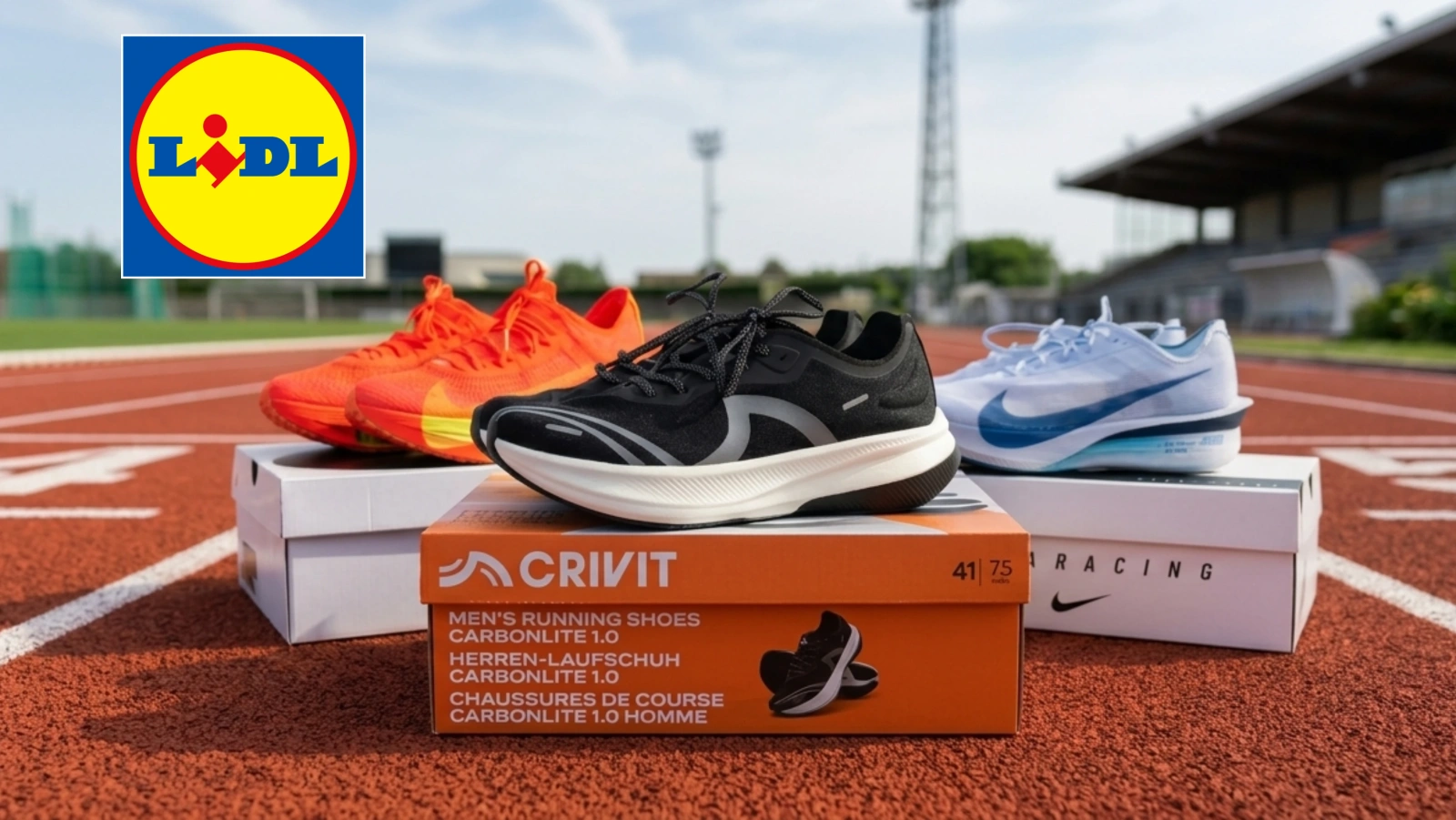

Lidl recently started selling a carbon-plated running shoe for fifty euros. Naturally, we had to compare it with the Nike Alphafly 3 and Vaporfly 3. It's not a fair comparison, but it's a fascinating one.
Crivit CarbonLite 1.0
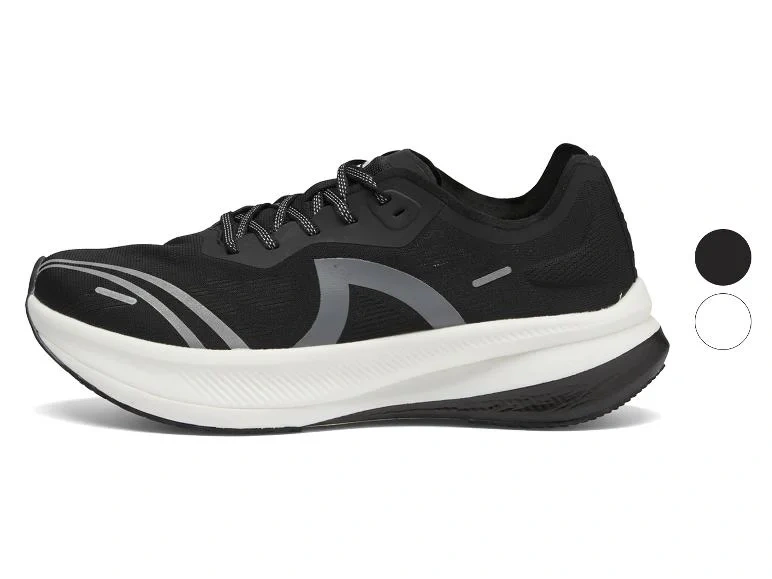
| Weight | 260g (measured, size 41) |
| Drop | 8 mm |
| Stack height | 38/30 mm |
| Midsole | EVA |
| Carbon plate | 3/4 length |
| Price | €49.99 - €69.99 |
The Crivit CarbonLite 1.0 is Lidl's first foray into the world of carbon race shoes. With a retail price between fifty and seventy euros (depending on the country), it costs a fraction of what you'd pay for a Nike supershoe. The shoe features a carbon plate spanning three-quarters of the sole length, an EVA foam midsole, and a knitted upper. Lidl claims a weight of 250 grams, but our scales say 260 grams in size 41.
- Absurdly low price for a carbon shoe
- Fun entry point for anyone curious about carbon
- Suitable for wider feet
- Sizing comparable to Nike
- Very hard, stiff foam sole (EVA instead of ZoomX)
- Too stiff for half and full marathons
- Too heavy for short distances where you want speed
- Lacing system difficult to secure
The challengers
The Vaporfly changed marathon running. The Alphafly took Kipchoge under two hours. And the CarbonLite sits in the middle aisle at Lidl, next to the cycling shorts.
| CarbonLite 1.0 | Nike Vaporfly 3 | Nike Alphafly 3 | |
|---|---|---|---|
| Price | €50 - €70 | €250 | €310 |
| Weight | 260g | 161g | 197g |
| Drop | 8 mm | 8 mm | 8 mm |
| Midsole material | EVA | ZoomX | ZoomX |
| Carbon plate | 3/4 length, flexible | Full-length, spoon-shaped | Full-length, double |
| Classification | Training shoe | Racing shoe | Racing shoe |
The drop is 8 millimetres on all three. That's also about the only thing they have in common.
How does it feel?
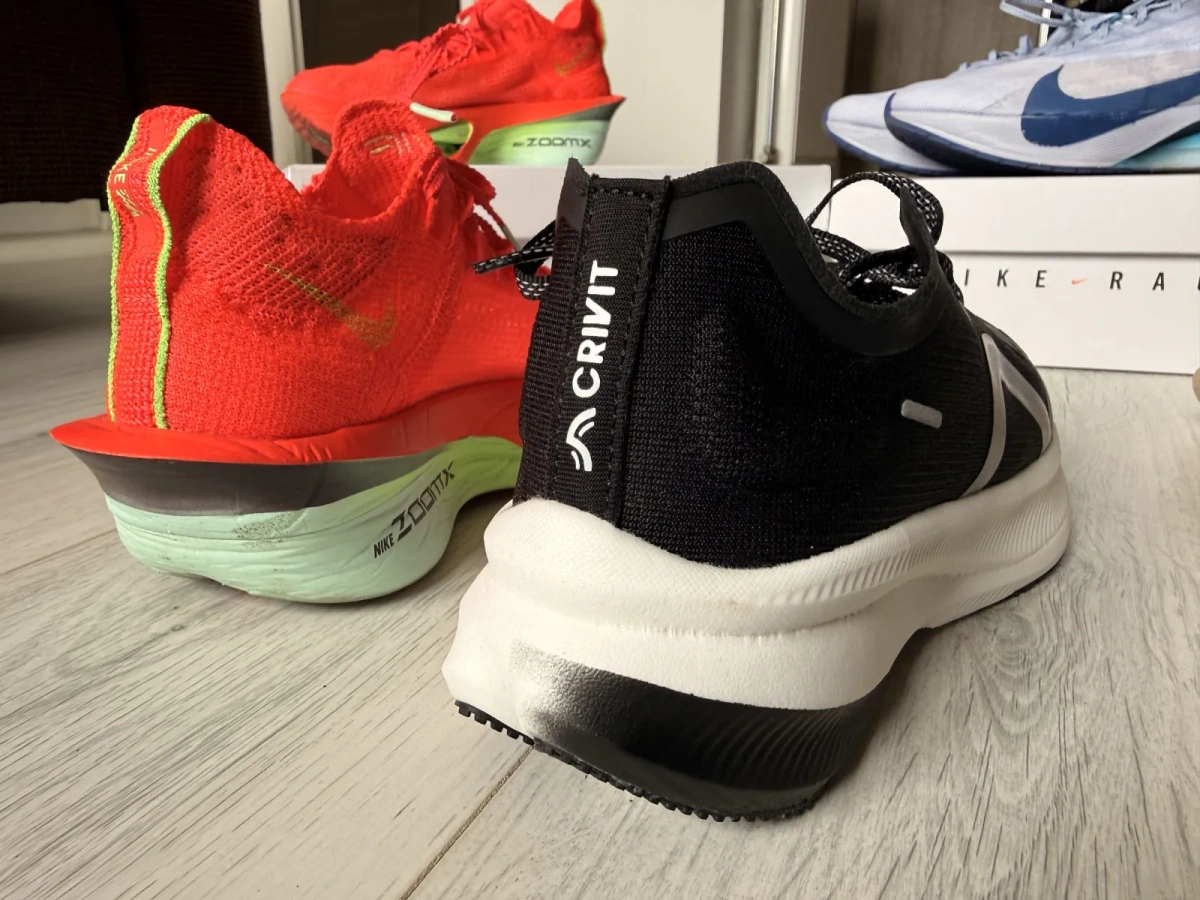
Lidl themselves joked about it on Instagram: with this shoe you'll be "first at the bakery."
The CarbonLite feels different from a regular running shoe. You feel the carbon plate, you feel something under your foot pushing you forward. It's not a placebo. But where Nike's ZoomX bounces back with springy resilience, the CarbonLite's EVA just feels hard. The plate does its job, the foam around it much less so.
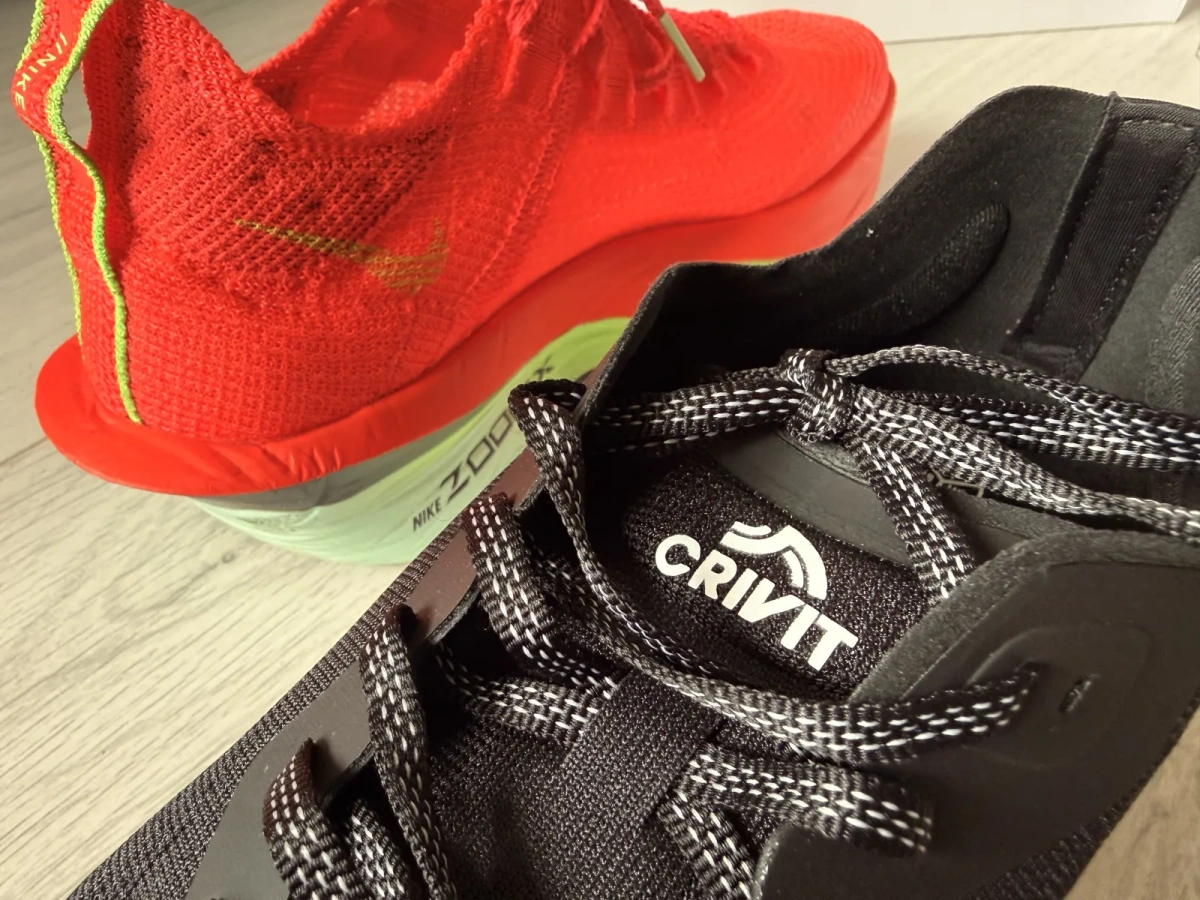
The fit is surprisingly good. The sizing matches Nike, and the shoe accommodates wider feet , something the Vaporfly actually struggles with. The lacing system is less successful: getting a secure midfoot lockdown remains tricky.
Then the question: what distance do you use it for? For a half or full marathon, the sole is too hard. After 15 kilometres you feel it in your legs. But for a 5K or 10K, at 260 grams it's really too heavy , a hundred grams more than the Vaporfly.
The specs
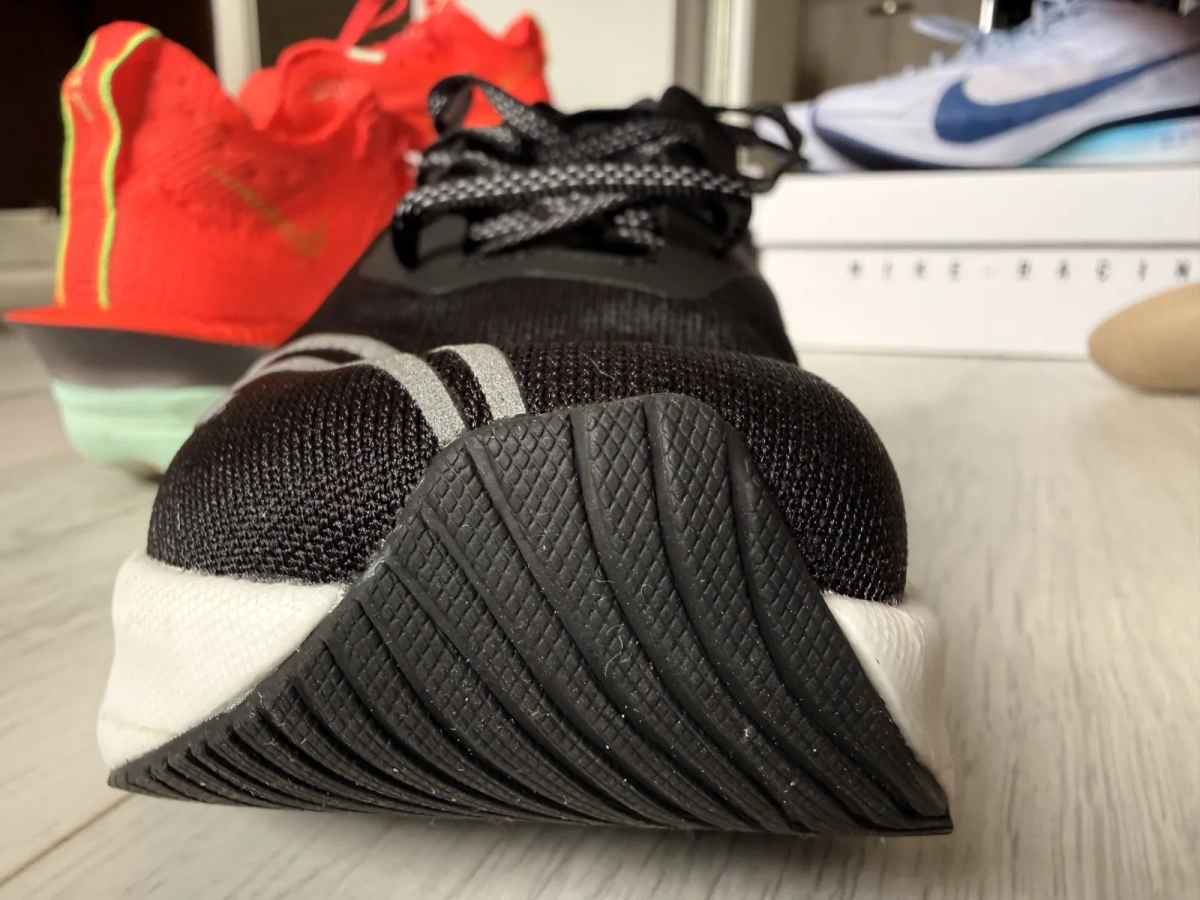
Weight: The Vaporfly 3 weighs 161 grams, the Alphafly 3 197 grams, the CarbonLite 260 grams , all in size 41. That's in line with what Lidl claims (250 grams), but still a good 60% heavier than the Vaporfly.
The foam: Nike uses ZoomX, a PEBA foam that's light, bounces back with energy return, and still cushions after 30 kilometres. Lidl uses EVA. EVA is decent foam , your garden chair has it too , but it doesn't deliver the same energy return. Runner's World Germany called the CarbonLite "positively surprising for the price," but classified it as a training shoe, not a racing shoe.
The carbon plate: The CarbonLite's plate runs three-quarters of the sole length and is more flexible than Nike's. Less aggressive, but also more approachable. The Vaporfly has a full-length spoon-shaped plate; the Alphafly adds two Air Zoom units on top of that. The difference in propulsion is noticeable.
The price: For the price of one pair of Alphaflys, you could buy six pairs of CarbonLites.
Who is this shoe for?
This might be the most important question. Because the CarbonLite isn't bad. It's just not what the marketing suggests.
A meta-analysis of 14 studies (2025) found that carbon supershoes improve running economy by 2 to 3%. That translates to roughly 1% faster marathon times, or a few minutes off a 3-hour marathon. But that research was about shoes with premium foam and aggressive plates. The CarbonLite is in a different category.
Buy this shoe if you:
- Are curious about what a carbon plate feels like
- Want an affordable shoe for tempo sessions
- Need a second pair for faster workouts alongside your daily trainer
Don't buy this shoe if you:
- Are looking for a serious racing shoe for your marathon
- Think you'll get the same thing for fifty euros as for three hundred
- Haven't built a solid running base yet (carbon plates require trained foot and leg muscles)
That last point is serious. Joe Nimble, a German shoe manufacturer, warned that carbon shoes are "a tool for measured use." The stiff plate can lead to overuse injuries in tendons and joints for untrained runners. And it's precisely the low price that makes it tempting to use this shoe as a daily trainer , which it isn't.
The verdict
The CarbonLite 1.0 is not a racing shoe. It's too heavy, too stiff, and the foam is too basic to seriously race in. But that's not the point either.
What Lidl is doing here is making carbon technology accessible. For fifty euros, any runner can feel what a carbon plate does. And if after a few runs you decide you want to take it more seriously, you'll know exactly what to look for in a more expensive shoe.
The Irish Times wrote that runners "would be sprinting to the middle aisle." That's right , not because this is the best shoe in the world, but because it's the most accessible one.
Final score: 7/10 for what it is, 3/10 for what it isn't.